This year has been a real experience while translating some amazing authors, having their books for the first time in Spanish. Now we have Don Jacobson, author of several complex variations of Pride and Prejudice, who is among the few gentlemen who have published a novel inspired in Jane Austen’s work.

Don, I´m so glad having you here. Could you tell our audience a little bit about you? What did you enjoy about being a teacher?
Thank you for having me here today. The “tell us about you” request is always the most difficult. I am on my third? Fourth? career. I began as a wire service reporter in Chicago and quickly moved over to advocacy journalism (writing corporate newspapers). Shortly thereafter I moved to industrial advertising and then to advertising agencies before opening my own shop. This grew from my writing, something I had been doing in one way or another since high school—so a half century now.
I had graduated with a degree in American History with a specialization in the history of American foreign policy, but all of the above (including marrying and starting a family) sent me in a different direction. In the early 1990s I needed to fill a gap in my life—and that was to return to university to pursue a master’s degree, this time in European History after 1789 with a special focus on decolonization in the mid-20th Century.
This degree allowed me to turn my eyes (to a degree) from advertising to teaching. What I found rewarding was the communication of information that would allow my students—young people in college who tended to look at the world in slices of the immediate present and unconnected to anything else—to truly comprehend the ground upon which they stood.
What are your other books that you have published before becoming an Austenesque author?
I published six books—all non-fiction—prior to moving into Austenesque prose. My first was Caves and Caving, a book about spelunking. Four cookbooks followed—The One Pan Gourmet, The One Pan Gourmet Cooks Light,’s The One Pan Galley Gourmet, and Roadcookin’: A long-haul driver’s guide to healthy eating (with Pam Whitfield, RD…my wife). I also wrote the study guide for the college textbook Out of Many.
What has inspired you to write Austenesque novels?
As an historian, I was entranced by the pioneering nature of Austen’s work. While there were predecessor novelists—Defoe, Field, Burney, Radcliffe—I found that Austen represented a break with the past in terms of character development and a deep study of the society through which the characters moved. Perhaps she can be considered the first post-Enlightenment novelist as she comes of age after the French Revolution. Austen (along with Walter Scott and Mary Shelley) broke old models and brought into life stories that are recognizable to modern readers.
What is it that fascinates you about our dear Jane?
As I noted earlier, Austen was (like Elizabeth Bennet?) an avid character sketcher. Her main characters are lively and three-dimensional. And, for an Austenesque author who uses her work as a starting point, she offers incredible foundations upon which to build stories using themes and plots that will engage modern readers.
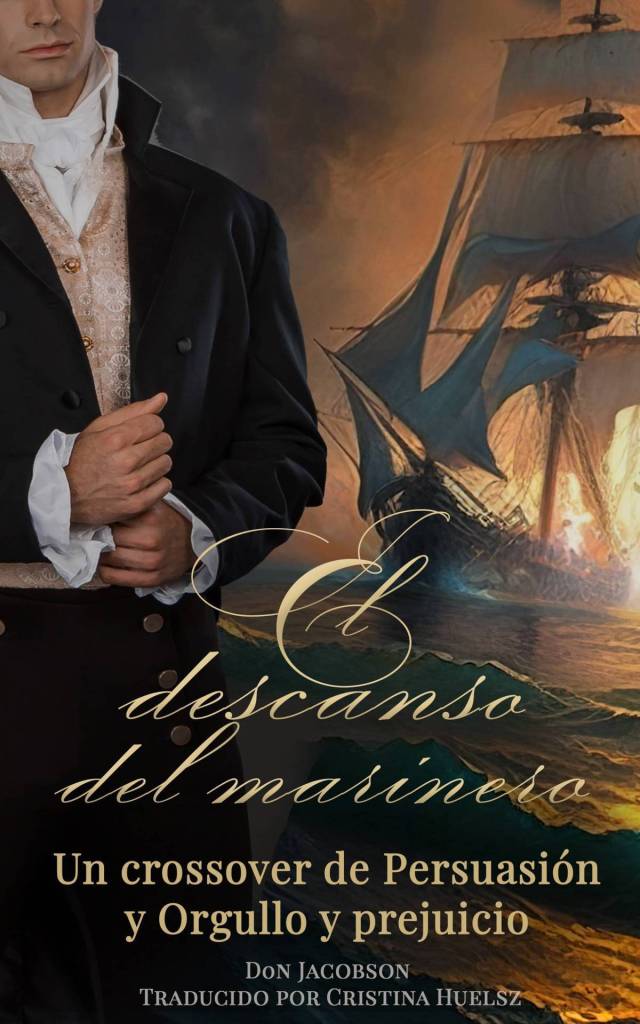
Which was the idea that set you to write “The Sailor´s Rest”?
Because I admire the perfection and the finality of both Pride and Prejudice and Persuasion, I always wanted to look over the horizon beyond the clear endings of both books. This combined with the idea that the two couples were remarkably similar in so many ways. The women were thoughtful, and the men were the most capable of their chosen profession. How would they interact if put through major stress?
How much did you have to research for this novel?
I referred to two books on the Georgian/Regency Navy—Wooden World by Rodger and Cordingly’s Cochrane. Beyond that, I am an avid reader of Napoleonic sea adventure novels.
Which is the part that you enjoyed more while writing it?
Any character or scene that made you feel joy? The book is divided into parts—the loss of the men and the joining of the women…the pursuit…the final reckoning. Each was challenging and fun to compose in its own way. If pressed, I would put the encounter between Darcy and William Elliot in the Bagatelle card club as being the most interesting. It is nothing like anything seen in Austenesque lit.
Now, my favorite character was Admiral Croft. You see, most interpretations of Persuasion play him for laughs by turning him into a caricature, sort of a Colonel Blimp personage. However, Austen tells us that Croft has just returned from a long posting in the Far East. The British Navy did not entrust fleets to idiots. Sea-going admirals (as opposed to those who attained the rank by living long enough—an admiral’s stars were conferred based upon seniority on the “list.”) were the most competent of all the captains of the fleet. Thus, Croft had to be someone to be reckoned with, not a bluff bumbler. I wrote him as the blue-coated equivalent to Brigadier Fitzwilliam (another rank which could not be purchased, only earned by merit). He becomes the one that makes everything in the book possible.
Which was the most difficult part of this novel?
Keeping character growth alive through multiple setting changes. I could have lost Elizabeth and Anne, Darcy and Wentworth in the naval adventure. I also wanted the supporting cast to grow along with the principles.
Why did you decide to translate this novel into Spanish?
I feel that Austen and, thus, Austenesque literature is global.
What do you think about having more reading around Jane Austen in other languages besides English?
People read the world over. As Austen is a foremother of the novel, I think other cultures would find her/our work interesting.
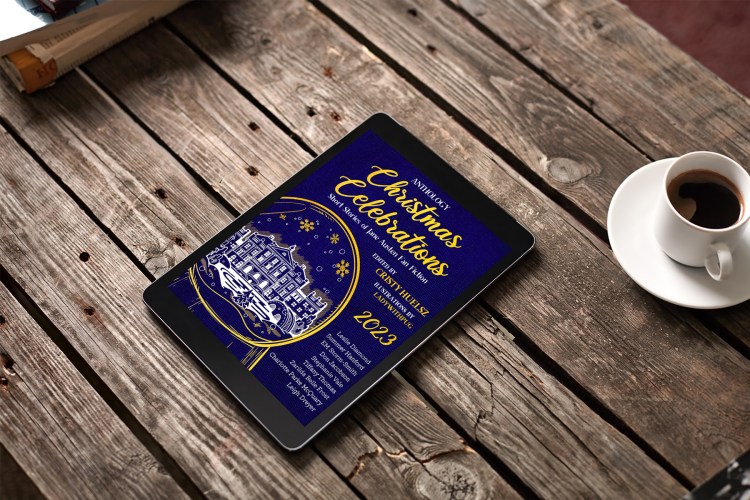
Now, our readers know little but you are participating in our Christmas Anthology this year. What made you to decide to participate? What was the inspiration for your short story?
It seemed like the right time for me to reach out through the anthology to the millions of readers who celebrate year-end holidays. Of course, you were persistent. The Gamekeeper’s Cabin is an idea that has been in my TBW pile for a few years. I like having the Darcys exposed to the other half, to see how they live.
As I wrote in the introduction to the English version of the story:
The Gamekeeper’s Cabin became clearer as I played with the plot bunny that had been hopping—and hiding—in my mind’s thickets. As many know, I am interested in understanding how changes in status (please see the Darcy/Smith reversal from In Plain Sight) impact how the characters act within the plot. While forcing Darcy and his bride of slightly more than a year to depend on the kindness of others, the story refused to be ODC (Our Dear Couple)-focused. I watched as the other couple—Charlie and Sally Tomkins, the gamekeeper and his wife—become the teachers who guided the Darcys to a new level of understanding.
A recent re-reading of the classic O. Henry story, The Gift of the Magi, inspired me. Another was Elder John Brackett’s original verse for the Shaker song, Simple Gifts.
‘Tis the gift to be simple, ’tis the gift to be free
‘Tis the gift to come down where we ought to be,
And when we find ourselves in the place just right,
‘Twill be in the valley of love and delight.
The true magic of the holiday season is the spiritual renewal of gifts made in love. The greatest are those that come from sacrifice intended to remain hidden from all but the one who sees everything.
That, to me, says it all.
Any other thoughts that you would like to share? No…but thank you again for your talent and work!
“The Sailor´s Rest” is a crossover of Pride and Prejudice and Persuasion, combining perfectly both novels into a whole adventure in the sea for our two couples, Elizabeth and Darcy, Anne and Wentworth, as they were close to their weddings, but something has separated them, and the ladies will have to do something brave in order to save their loved ones, but they are not alone, for what are family and friends in the Navy good for? Available through these links on Amazon:
English edition / Spanish edition
Our Christmas Anthology will be available both in English and Spanish for free on Jane´s Birthday, December 16th!
You can follow Don Jacobson through his social media and all of his books in Amazon:
 Cris Translates